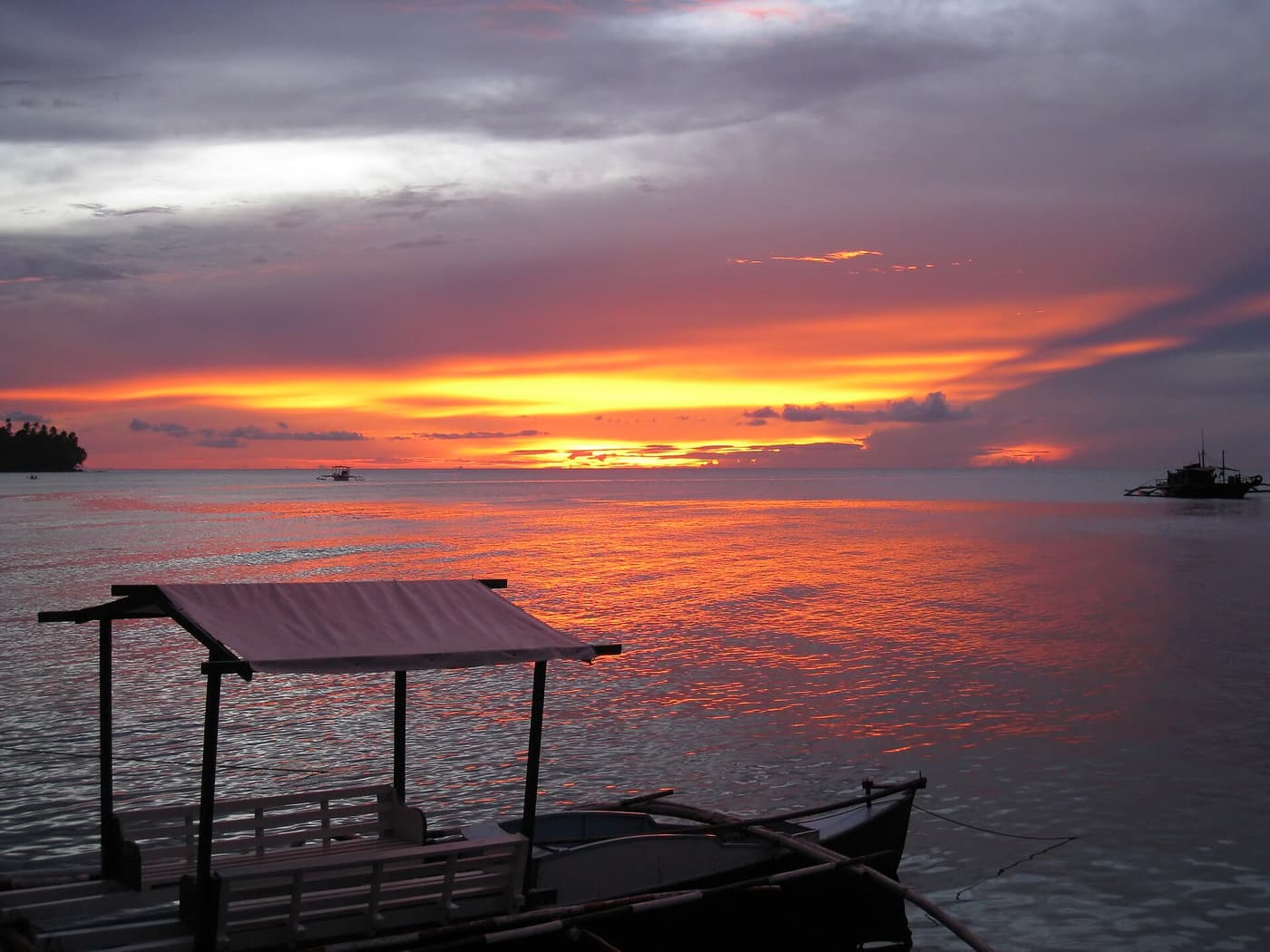
Camiguin is tropical and warm all year, with daytime temperatures typically around the high 20s to low 30s °C. Rain can fall in any month, but there is a noticeable rhythm: the period from roughly March to May is usually the driest and hottest, while the months around November to January tend to be the wettest, with more rough-sea days on the northern coast.
The short answer: March to May for the best odds of sunshine and calm seas, October for the Lanzones Festival, and almost any time if you are flexible.
Month by month
| Months | Weather (typical) | Sea & boat trips | Crowds |
|---|---|---|---|
| Jan–Feb | Showers likely, especially early in the year | Rougher on the north coast at times | Quiet after New Year |
| Mar–May | Driest and hottest | Usually calm — best for island-hopping | Busy at Holy Week and Philippine summer holidays |
| Jun–Sep | Warm, with afternoon showers | Generally workable; check daily | Moderate |
| Oct | Showers possible | Variable | Lanzones Festival — book early |
| Nov–Dec | Often the wettest | More cancelled boat days | Busy around Christmas and New Year |
Festivals and holidays
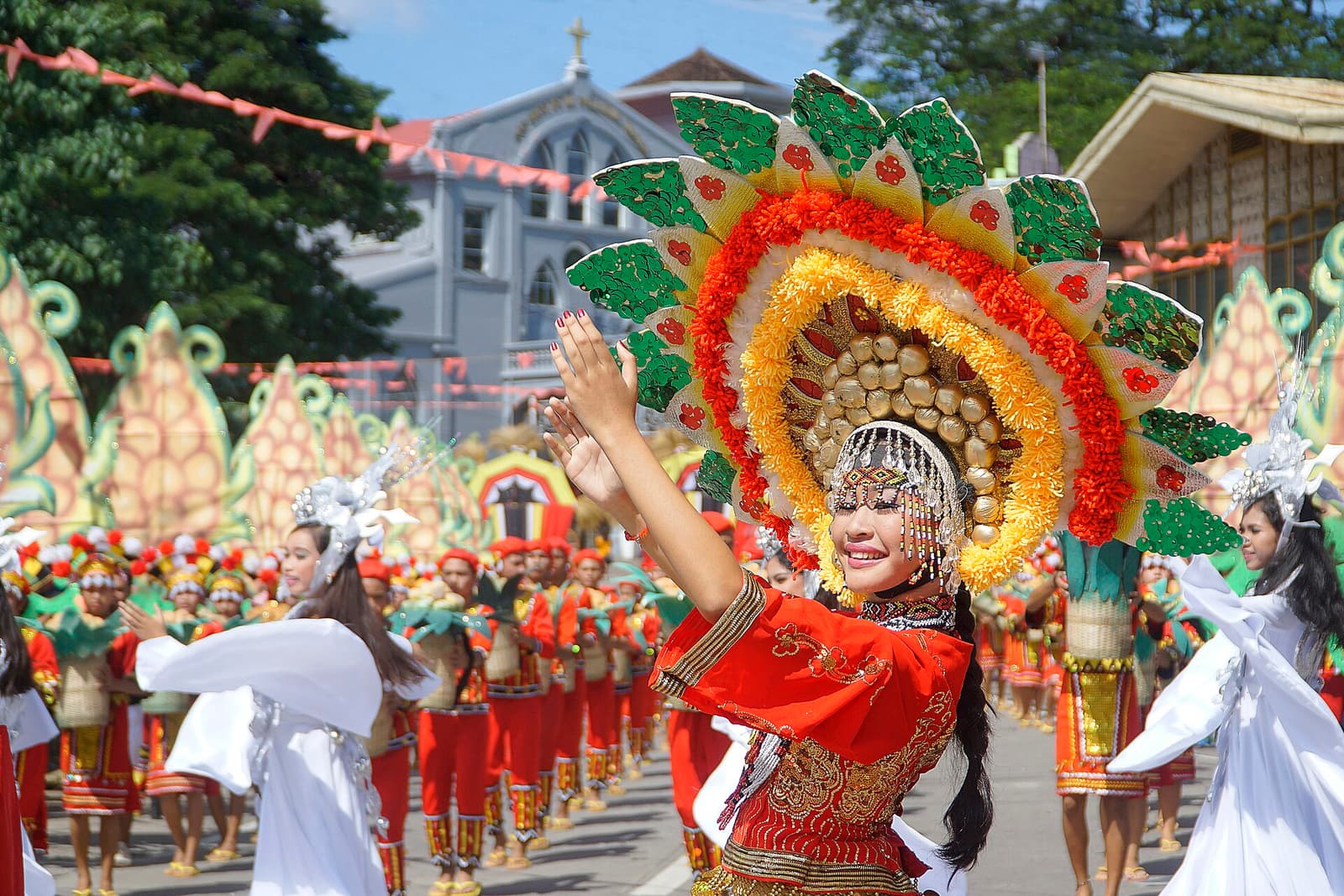
- Lanzones Festival (October): street dancing and parades in Mambajao celebrating the lanzones harvest — dates are announced each year.
- Holy Week (March/April): pilgrims climb the Old Volcano’s Stations of the Cross and many walk around the island — the Panaad tradition. Ferries and rooms fill up.
- Christmas and New Year: Filipino families travel home and on holiday; book transport early.
Typhoons and storms
Camiguin lies south of the main typhoon track, but tropical storms and heavy rain do occasionally affect the island, and severe flooding has happened in the past. Follow PAGASA weather bulletins, buy travel insurance and keep a buffer day before flights.
Time of day matters too
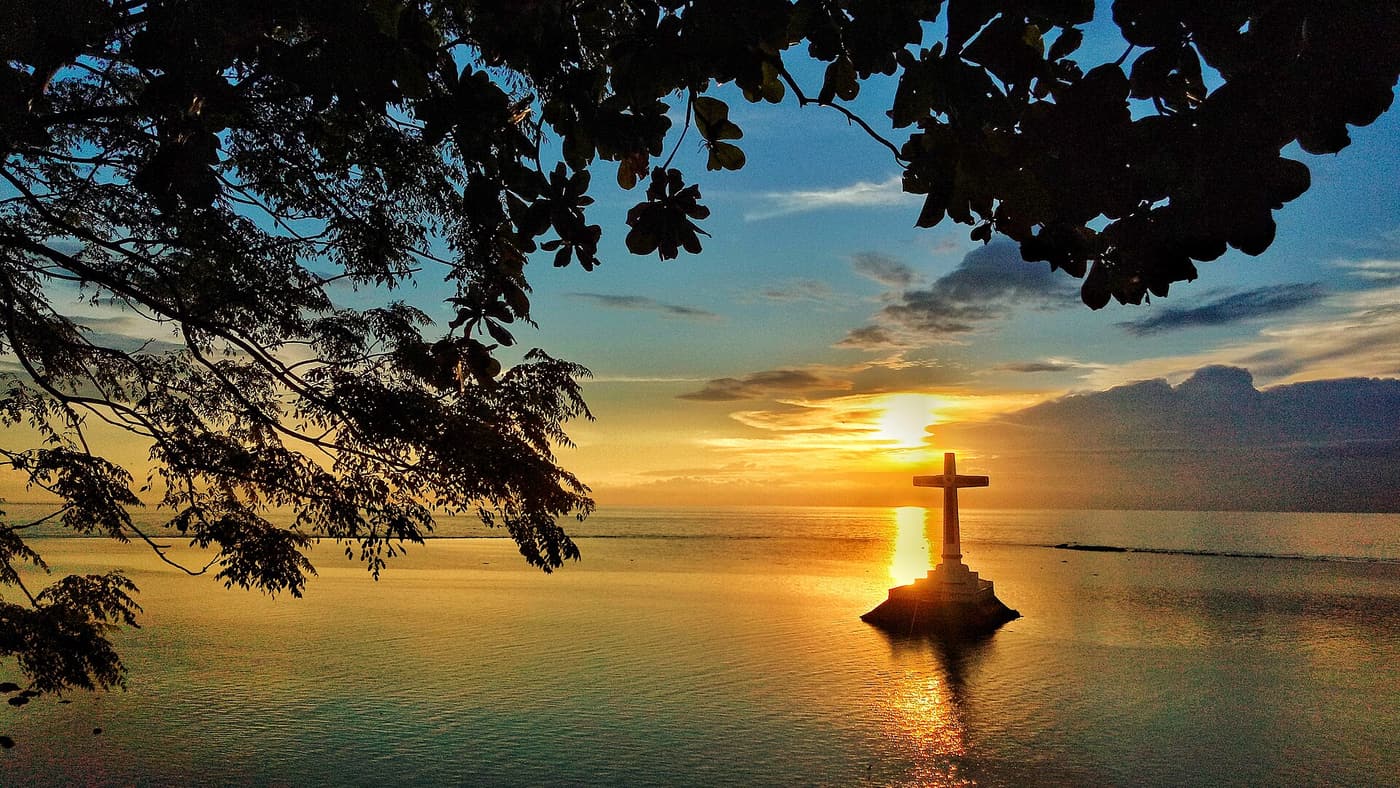
Go to White Island at sunrise, the falls in the morning before tour groups, the hot spring in the evening and the Sunken Cemetery for sunset. That simple rhythm makes any month better.