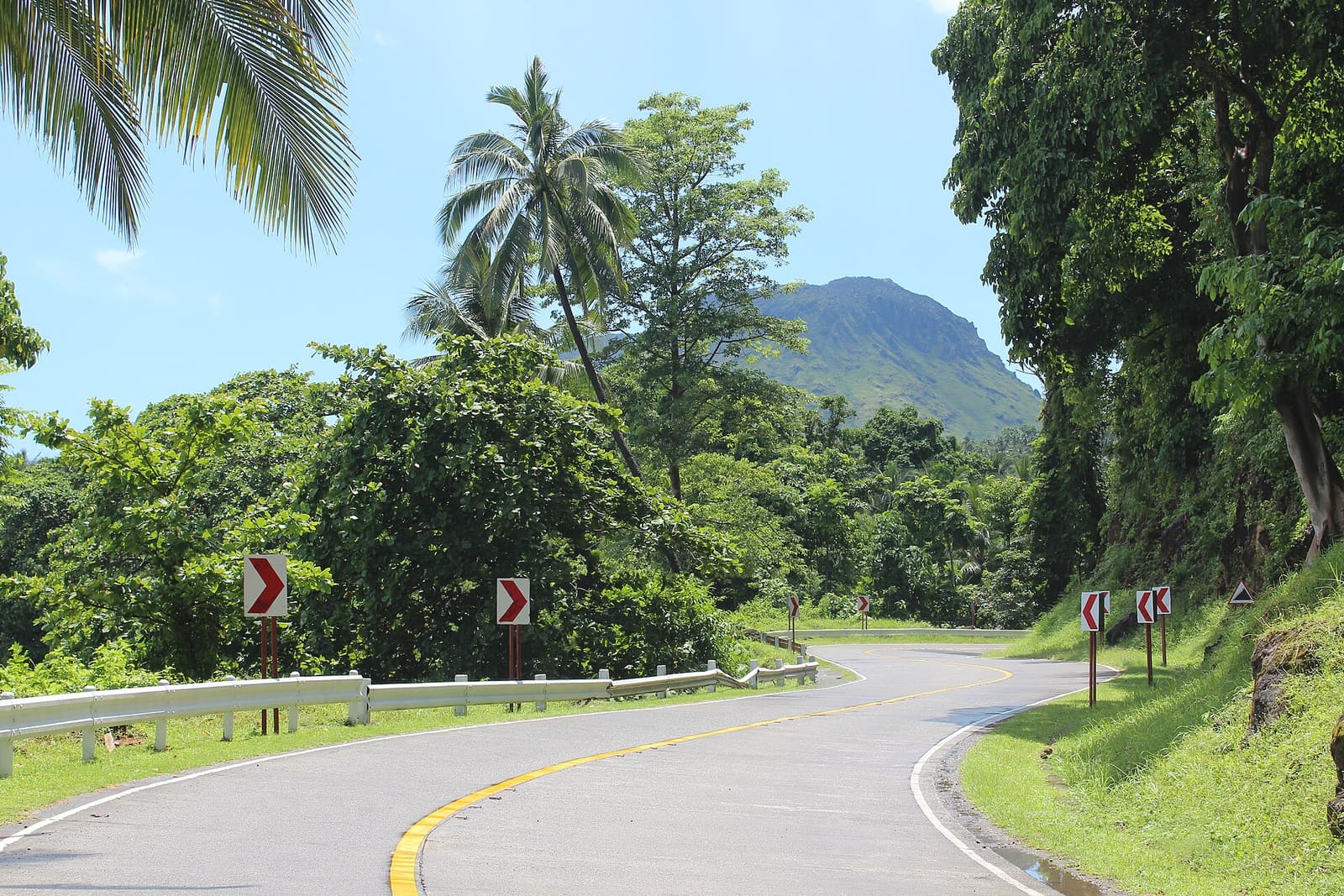
Camiguin is small enough to drive around in an afternoon and rich enough to fill a week: volcanoes and their legacies, waterfalls and springs, islets and reefs, and a gentle pace of life that many visitors remember most of all.
Camiguin at a glance
- Where: an island province in the Bohol Sea, part of Northern Mindanao (Region X), Philippines.
- Size: about 240 km², with a coastal road of roughly 64 km.
- Towns: Mambajao (capital), Mahinog, Guinsiliban, Sagay and Catarman.
- Language: Cebuano (Bisaya) is spoken widely, along with Filipino; English is commonly understood in tourism.
- Money: Philippine peso (PHP). ATMs are mainly in Mambajao; cash is king.
- Electricity: 220 V; flat-pin sockets are common — bring an adapter.
A short history of the Island Born of Fire
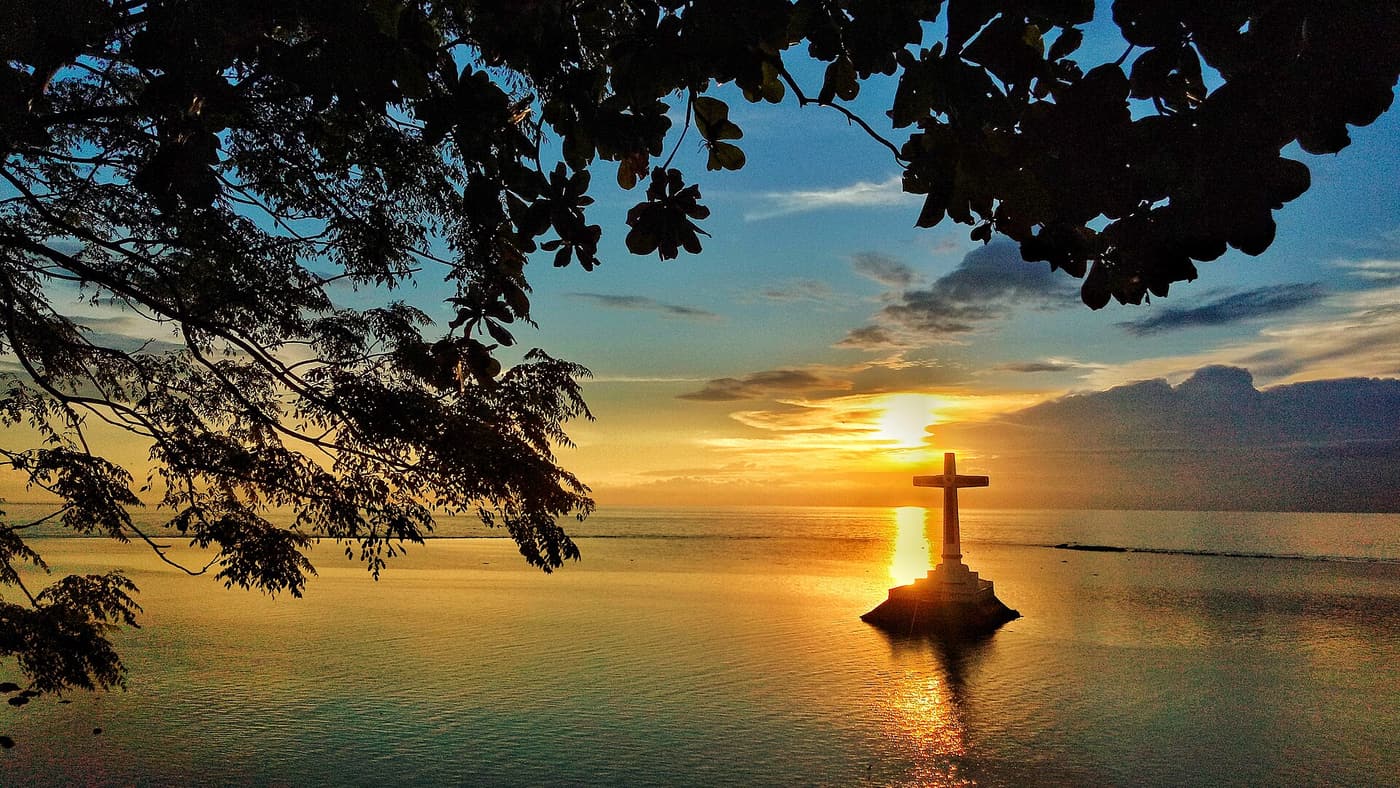
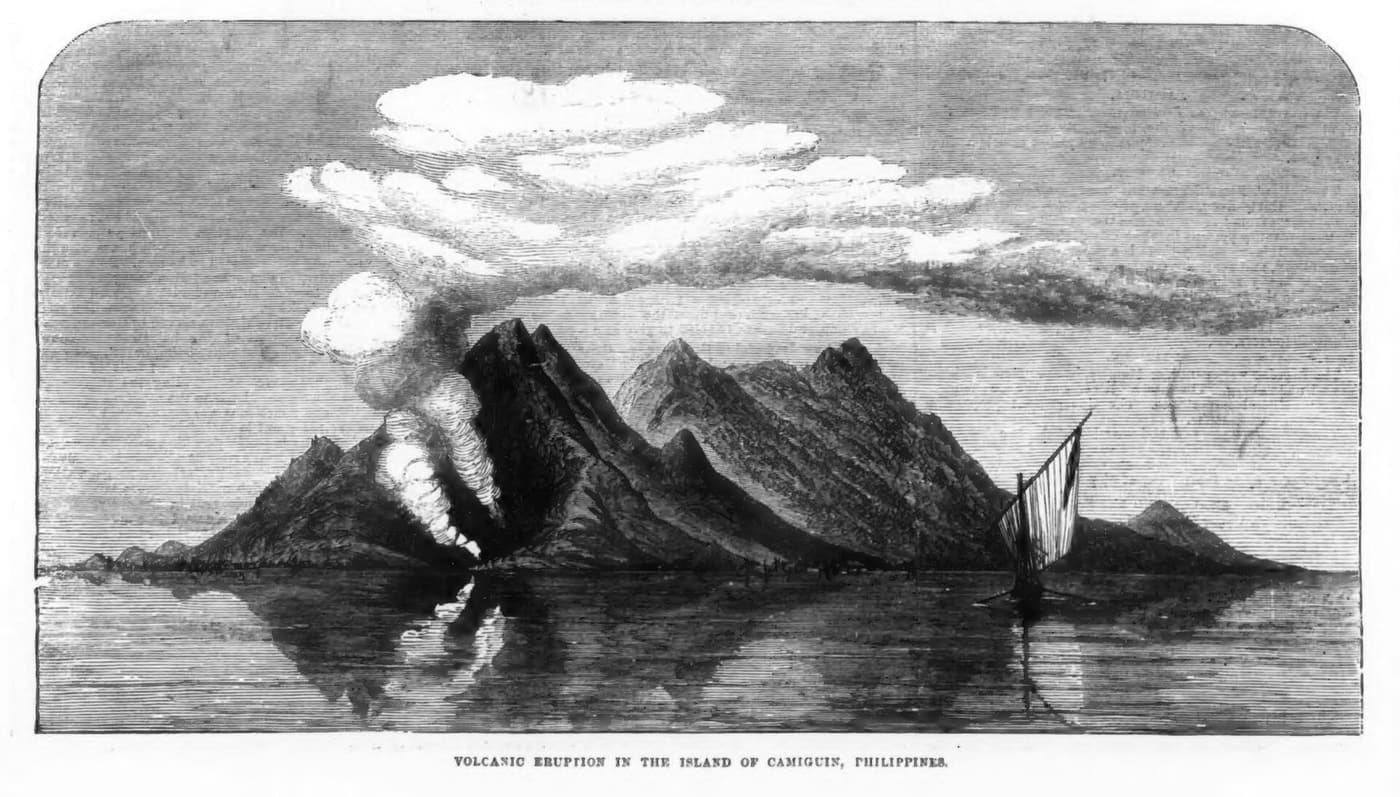
Camiguin is entirely volcanic. Its highest peak, Mount Hibok-Hibok, has erupted several times in recorded history; the eruption of 1951 was the deadliest, and the volcano is still monitored by PHIVOLCS. In 1871 a new volcano, Mount Vulcan, began growing near the old town of Catarman. Over the following years it buried part of the town; the land subsided and the town cemetery slipped into the sea — today marked by the cross of the Sunken Cemetery. The ruined walls of the old church at Gui-ob survive nearby.
Spanish missionaries arrived in the 16th and 17th centuries, and the island became part of the province of Misamis Oriental before becoming a province of its own in 1966. Today it lives mainly from farming, fishing and a growing, still small-scale tourism industry.
The highlights
 Catarman & the volcanic west
Sunken Cemetery
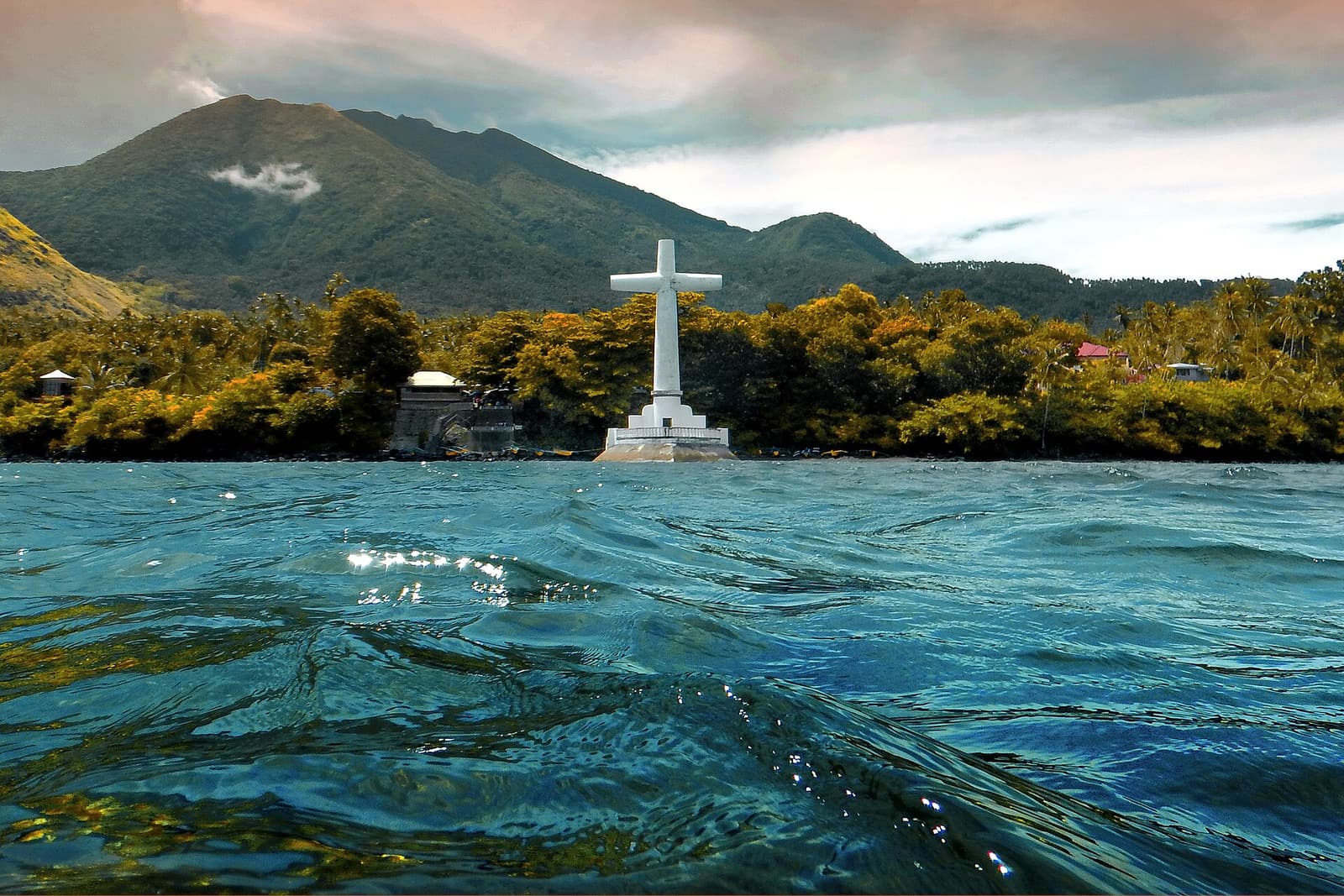
A giant white cross in the sea marks the graves of a town swallowed by the 1871 eruption
When Mount Vulcan was born in the eruptions of 1871, the old town of Catarman sank and its cemetery slipped beneath the sea. A huge white cross now stands on a platform offshore — Camiguin’s most famous view, best at sunset, with snorkelling and diving over the site.
 Mambajao & the north coast
White Island
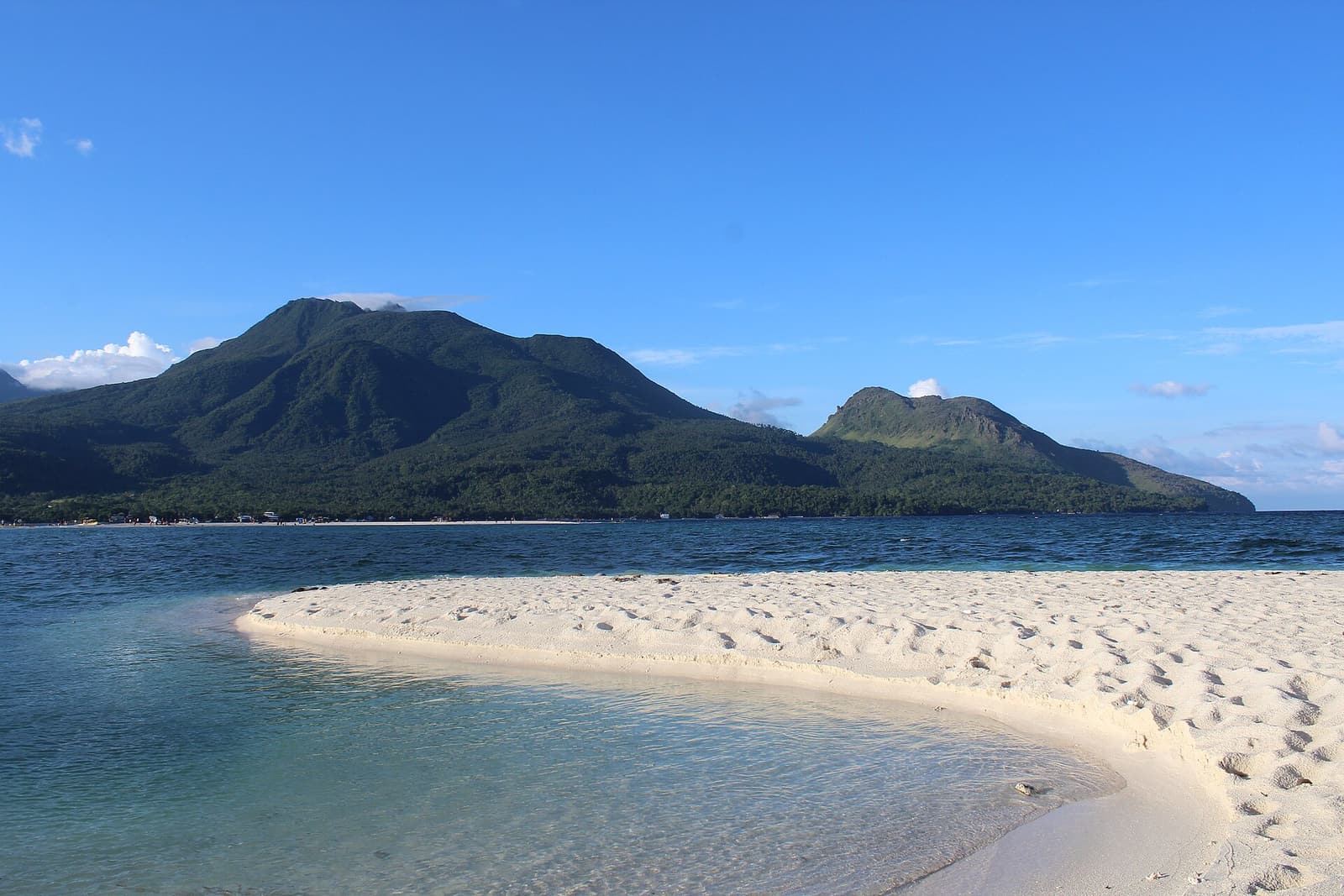
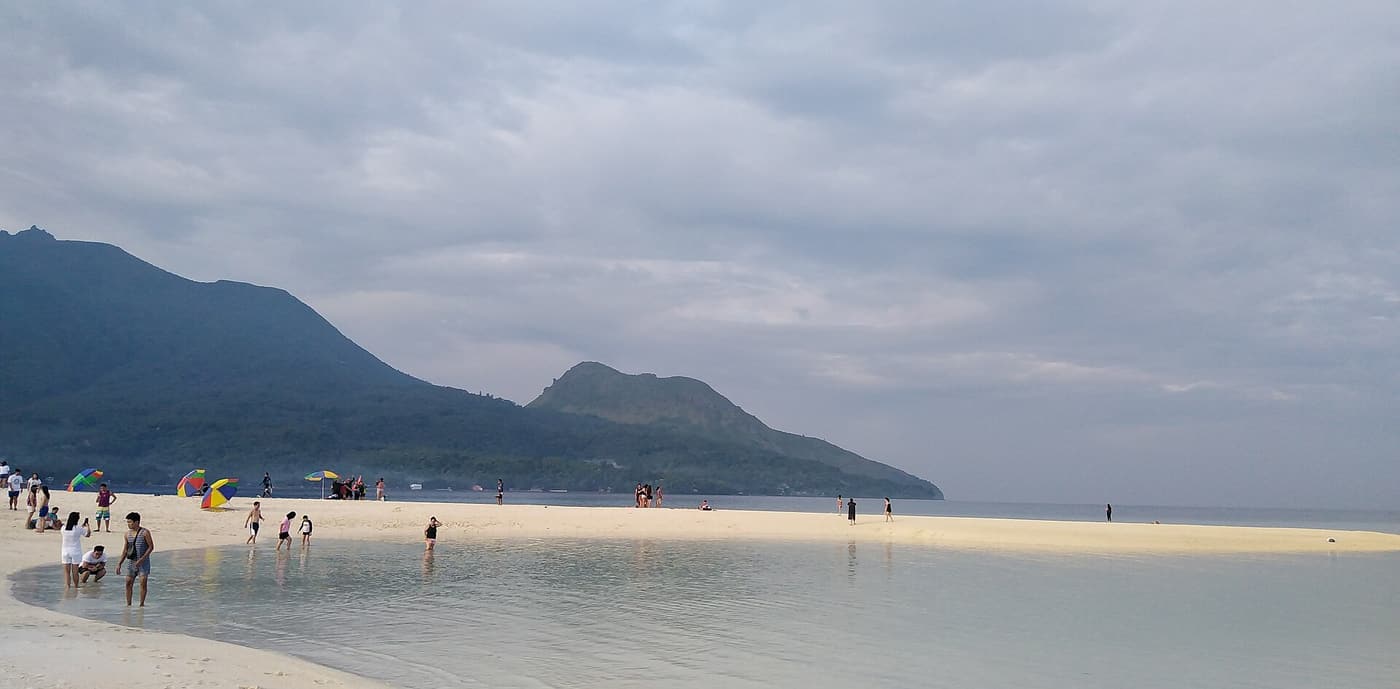
A bare crescent of white sand off the north coast, with two volcanoes as the backdrop
An uninhabited, shifting sandbar a short pump-boat ride from Agoho and Yumbing, with no trees and no buildings — just sand, clear water and a view straight back at Mount Hibok-Hibok and the Old Volcano. Go early, before the sun and the crowds get fierce.
 Mahinog, Guinsiliban & the east
Mantigue Island
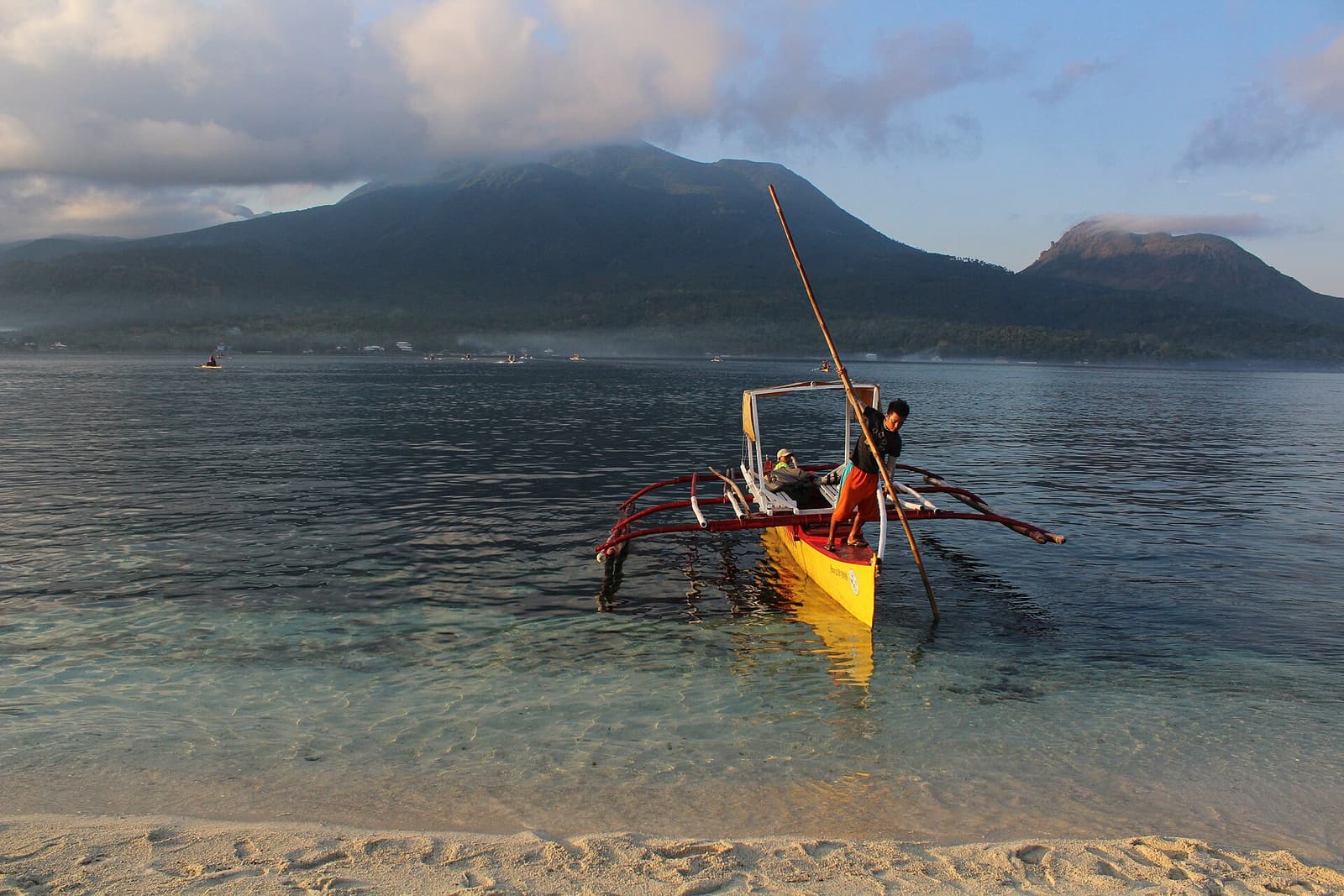
A small forested island and marine sanctuary off the east coast, ringed by white sand
Mantigue is a small, wooded island a boat ride from Mahinog with a white-sand beach, a protected marine sanctuary and some of the island’s best snorkelling over reef and a drop-off. Entry and boat fees are paid locally.
 Mambajao & the north coast
Katibawasan Falls
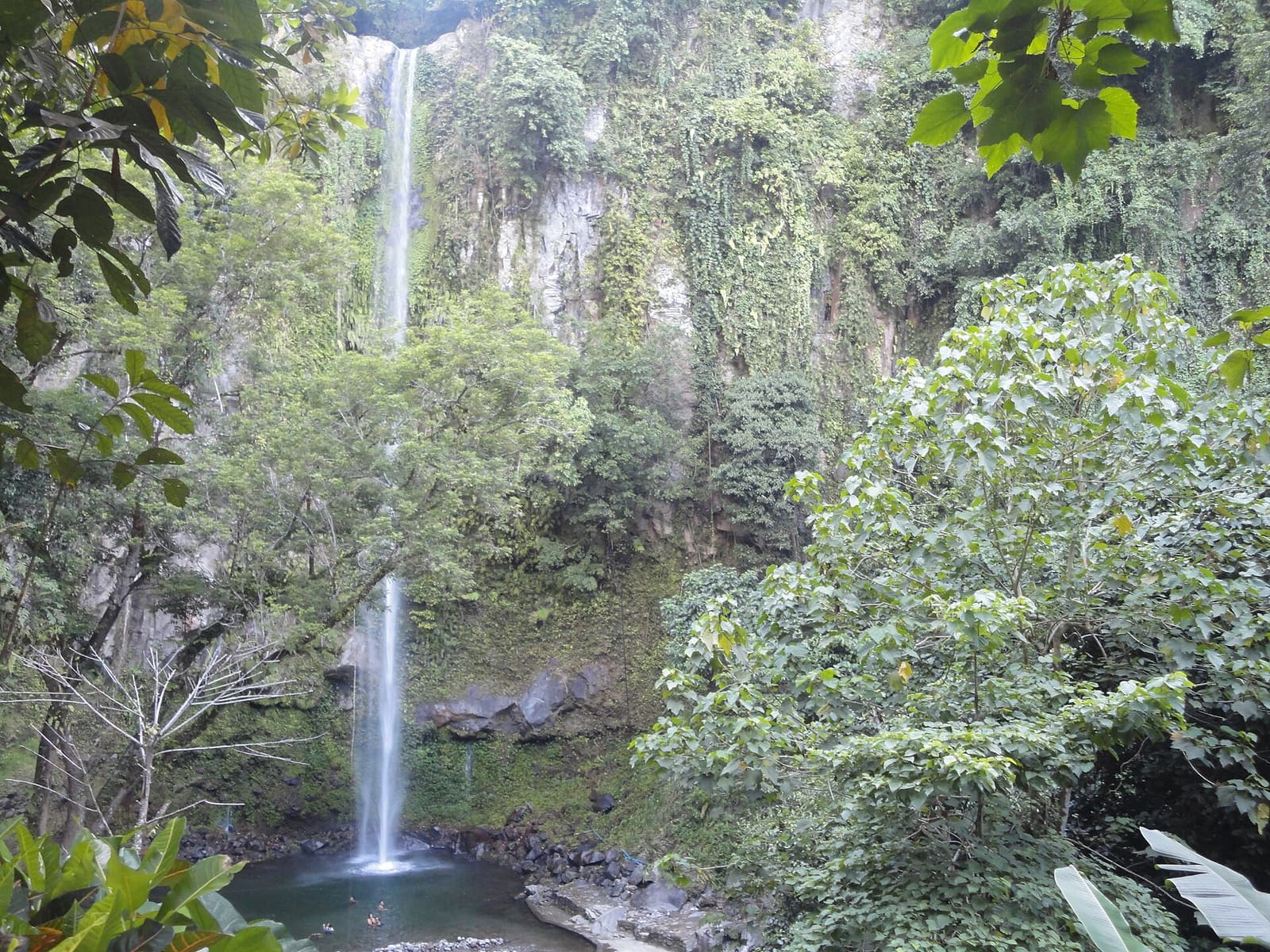
A ribbon of water dropping some 70 metres into a cool pool in the forest above Mambajao
Camiguin’s best-known waterfall plunges down a fern-draped cliff into a rock-ringed pool a short drive uphill from Mambajao. Swimming in the cold water is the point; arrive early to have it to yourself.
Also worth your time: Santo Niño Cold Spring, the giant clam sanctuary in Guinsiliban, Taguines Lagoon by the ferry port and Mambajao, especially during the October Lanzones Festival. See all places.
Suggested itineraries
Two days
- Day 1 (sea): White Island at sunrise, Mantigue Island for snorkelling, the giant clams on the way back, Ardent Hot Spring in the evening.
- Day 2 (land): Katibawasan Falls early, then west to Tuasan Falls and the cold spring, the Gui-ob ruins and the Old Volcano walk, ending at the Sunken Cemetery for sunset.
Three or four days
- Add a dive or snorkel trip, a slow beach day on the Agoho–Yumbing strip, or Hibok-Hibok with a guide (fit hikers only).
- Spend a morning in Mambajao, try pastel buns, and watch the sunset from a clifftop restaurant or the beach.
Short on time or not riding a scooter? A private tour fits the two-day plan neatly.
Diving and snorkelling
Camiguin’s volcanic slopes continue underwater, with reefs, walls and black-sand slopes. Popular sites include the reefs around Mantigue Island, the Sunken Cemetery and the waters near White Island. Several dive centres on the north-west coast run trips and courses; choose one with good safety practices and well-maintained equipment.
Food to try
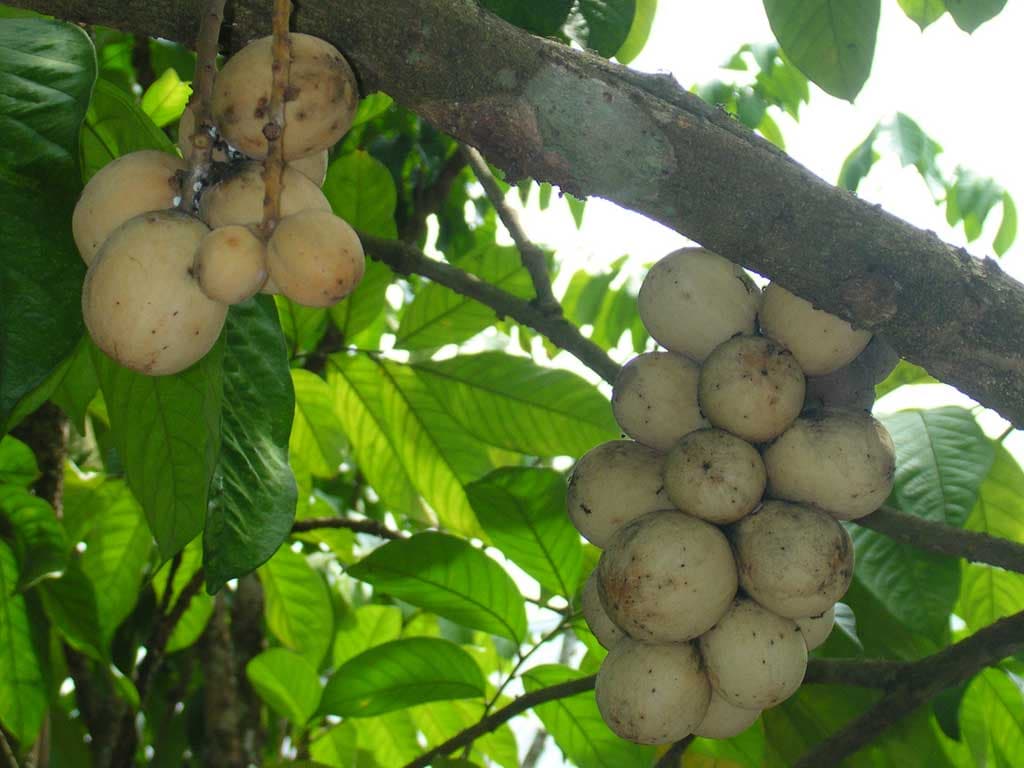
- Lanzones — the island’s pride, sweet and juicy in season (roughly September to November).
- Pastel — soft buns filled with yema-style custard, sold all over Mambajao.
- Kinilaw — fresh fish “cooked” in vinegar and citrus, and grilled seafood at Taguines Lagoon.
Money, connectivity and safety
- Cash: most guesthouses, boats, entrance fees and eateries are cash only. ATMs are in Mambajao and can run dry at weekends and festivals.
- Mobile data: generally available in towns and along the coast; weaker inland and on the mountain.
- Road safety: wear a helmet, avoid riding at night, and watch for dogs, chickens and children on the road.
- Volcano and sea: follow PHIVOLCS advisories for Hibok-Hibok and coast-guard warnings for boats.
- Travel advice: some governments issue specific advice for parts of Mindanao; check your own government’s current guidance and your insurance terms for Camiguin.
What to pack
- Reef-safe sunscreen, hat and sunglasses — White Island has no shade.
- Water shoes or sandals with grip for falls and rocky beaches.
- A light rain jacket in any season, and a dry bag for boat trips.
- Snorkel mask if you have one, insect repellent and enough cash.
Responsible travel
Pay the environmental fees — they fund the sanctuaries. Never touch coral or clams, avoid single-use plastic, dress modestly in churches and ask before photographing people.